China Top Rigid Flex PCB Manufacturers and Their Innovations?
The realm of PCB rigid flex is evolving rapidly, driven by innovation and technological advancements. Notably, Dr. Helen Wang, a leading expert in flexible circuits, emphasized, "The future of electronics lies in the seamless integration of rigid and flexible technologies." This statement reflects the growing importance of PCB rigid flex in today's electronics industry.
China stands out as a key player in manufacturing PCB rigid flex assemblies. Companies are pushing boundaries to enhance performance and efficiency. They focus on miniaturization and reliability, catering to industries like telecommunications and automotive. These innovations pave the way for compact designs without compromising functionality.
Despite the impressive growth, challenges remain. Some manufacturers may overlook quality control amid rapid production. Striking a balance between speed and reliability is essential. Continuous improvement and attention to detail can help overcome these hurdles. The future of PCB rigid flex holds great potential, but providers must navigate their constraints wisely.

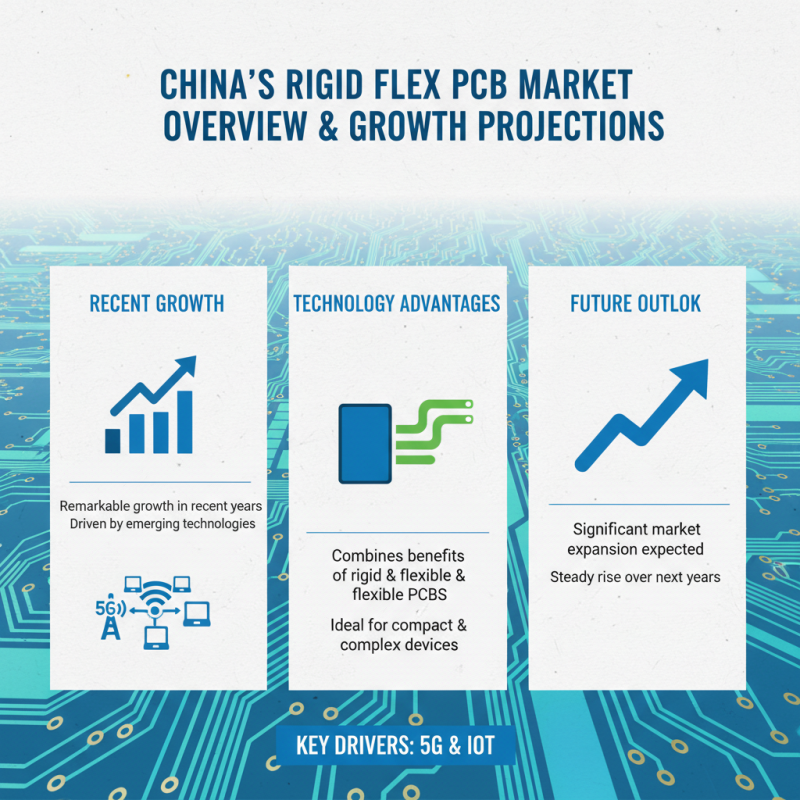
China's Rigid Flex PCB Market Overview and Growth Projections
China's rigid flex PCB market has shown remarkable growth in recent years. Emerging technologies, like 5G and IoT, drive demand for flexible circuit boards. These boards combine the advantages of rigid and flexible PCBs, making them ideal for compact and complex devices. The market expects significant expansion, with projections indicating a steady rise over the next few years.
Manufacturers are innovating rapidly. They focus on enhancing durability and reducing size while improving performance. However, some challenges persist. Quality control remains critical. With the increased complexity of designs, maintaining reliability is essential. Companies must invest in research and development to address these issues. New materials are also being explored to achieve better functionalities.
Market dynamics are changing as suppliers adapt to trends. The push for eco-friendly processes impacts manufacturing choices. Companies face the need for sustainable solutions while meeting consumer demands. This dual pressure creates a landscape where innovation is necessary. Balancing these aspects is not easy but vital for long-term success. Stakeholders must navigate these complexities to thrive in this evolving market.
Key Players in China's Rigid Flex PCB Manufacturing Landscape
The landscape of rigid flex PCB manufacturing in China is vibrant and competitive. Various players are pushing the boundaries of innovation. These manufacturers focus on enhancing durability, flexibility, and performance. They are tailoring designs to meet the demands of industries like automotive and consumer electronics. Their commitment to technology is evident in the solutions they provide.
One key aspect is the integration of advanced materials. These materials improve thermal management and signal integrity. Some manufacturers experiment with unusual combinations of materials. This experimentation can lead to breakthroughs but also presents challenges. Reliability must not be compromised while pursuing efficiency. Industry experts often highlight the balancing act of innovation and quality.
Moreover, these manufacturers are investing in automation and smart manufacturing techniques. Automation increases production speed but requires careful consideration of quality control. Striking this balance remains a significant challenge for many. There are ongoing discussions about sustainability and reducing waste. This focus on eco-friendly practices is reshaping the industry landscape. The evolution of rigid flex PCBs is not just about technology; it reflects a broader commitment to responsible manufacturing.
Innovations and Technologies Driving Rigid Flex PCB Advancements
Rigid flex PCBs (Printed Circuit Boards) have recently gained traction due to their innovative designs and adaptability. These boards integrate rigid and flexible substrates, allowing for advanced electronics in various industries. Significant innovations include improved material compositions, which enhance durability and performance. According to a recent industry report, the global rigid flex PCB market is anticipated to grow at a CAGR of 10.8%, indicating strong demand.
One notable technology driving advancements is automated production processes. These processes increase efficiency and reduce human error. With higher precision, manufacturers can create intricate designs that fit compact spaces. Furthermore, advancements in adhesive materials have led to better bonding, ensuring reliability even in challenging conditions. These innovations highlight the need for ongoing research, as certain challenges remain with thermal management and cost efficiency.
As manufacturers continue to innovate, sustainability is becoming a focal point. Many are exploring eco-friendly materials to minimize environmental impact. Despite these advancements, the industry faces obstacles like complex regulatory requirements and market saturation. Addressing such issues requires collaboration among industry leaders and ongoing dialogue on best practices.
China Top Rigid Flex PCB Manufacturers and Their Innovations
| Manufacturer Type |
Innovation Focus |
Technological Advancements |
Year Established |
Market Reach |
| High-End Manufacturer |
Miniaturization |
Flexible Substrates & High Density |
2005 |
Global |
| Mid-Tier Manufacturer |
Cost Reduction |
Automation in Production |
2010 |
Asia-Pacific |
| Emerging Startup |
Sustainable Materials |
Eco-friendly Substrates |
2018 |
Local |
| Established Leader |
High Performance |
Advanced Layer Technology |
1998 |
Worldwide |
| Innovative Manufacturer |
Enhanced Flexibility |
Next-Gen Materials |
2002 |
Europe |
Market Trends: Demand for Rigid Flex PCBs in Consumer Electronics
The demand for rigid-flex PCBs in consumer electronics has surged significantly. This trend aligns with the rapid advancement of technology. Compact designs are essential. Rigid-flex PCBs offer both flexibility and durability. They help in space-saving solutions, especially in smartphones and wearable devices.
Manufacturers are innovating to meet these demands. New materials are being developed to enhance performance. Thinner designs are becoming standard. This creates complex circuitry in smaller spaces. However, the production process can lead to imperfections in the final product. Manufacturers often face challenges maintaining quality control and reliability.
Market dynamics are also evolving with consumer preferences. Users seek high performance without sacrificing design. The trend is clear: innovation must continue. Each challenge presents an opportunity for improvement. Companies that adapt quickly will thrive in this competitive landscape.
Challenges and Opportunities for China's Rigid Flex PCB Manufacturers
China's rigid flex PCB manufacturers face unique challenges in a rapidly evolving market. With a projected growth rate of 10.5% from 2023 to 2028, the demand for advanced printed circuit boards is increasing. However, manufacturers must navigate rising material costs and tight supply chains. Increasing environmental regulations also add complexity to production processes. These challenges demand innovative solutions and adaptability.
Opportunities exist for manufacturers who embrace advanced technologies. The integration of IoT and AI in manufacturing processes can enhance efficiency. Reports suggest that the use of smart manufacturing techniques could reduce production costs by up to 15%. Moreover, a focus on sustainability can attract environmentally conscious clients. Many manufacturers are investing in eco-friendly materials, though this shift can be costly and requires significant research.
While the market presents significant prospects, the competition is fierce. Manufacturers must continuously invest in R&D to stay ahead. A lack of skilled labor in certain areas can hinder innovation. Addressing these workforce gaps is crucial for long-term success. Companies need to reflect on their strategies and ensure they align with rapidly changing market demands or risk falling behind.